By Ben Kirchner and The Last Mile Team.
First, a thank-you. Damian has been the voice of The Last Mile, and his captivating stream of thought leadership is the reason a lot of you open it. I’m taking over from here, and I plan to keep his habit of checking the math before trusting the headline.
So let’s start where he would, on the floor.
Contact centers spent twenty years coaxing customers into self-service. Nobody planned for customers to show up with automation of their own. That automation is already dialing your number, and it is not a niche download.
Who is calling
Four consumer AI agents can now phone a business:
- Muse from Meta places calls to US businesses in beta. On October 29 it was the #2 free iPhone app in the US.
- Google’s Call for Me runs inside Gemini, the #9 free app. On Pixel 11 phones it calls from the customer’s own number, works the menu and waits on hold.
- Instinct places calls in early access. It has no app. Customers text it.
- Grok Bot ranked #8 in Productivity the same day. Elon Musk says it now makes calls.
Two more, OpenAI’s dots and Anthropic’s Claude Duet, skip the phone and come in through your website.
Keep that in proportion. Chart ranks count downloads, and most of these calling features are still betas or invite lists. The capability is built. The scale is a roadmap.
Your IVR has run on friction for years. Menu depth, hold music, the sigh at minute six. It works because people get bored and hang up.
Software does not get bored.
Banks felt it first
On October 27, American Banker reported in Banks are blocking external AI agents. Is this sustainable? that at least five large US banks are blocking AI agents from customer accounts. A week earlier, Axios reported in Unvetted AI agents are accessing U.S. bank accounts that some of those agents were contacting call centers.
Also look closely at the word unauthorized. Most of these agents are not breaking in. They log in with the customer’s own password. The customer said yes. The bank did not. That gap is a business decision, and your contact center is where it gets enforced.
Meanwhile, the companies building these agents are drafting rules for them. A public draft of the Personal Agent Protocol went up on October 9. It is at version 0.3 and still changing. Two ideas in it matter now: a personal agent always identifies itself, and a customer can grant it read-only access. Genesys, a co-developer, put it plainly in Personal AI Will Change the Customer Relationship: technical capability doesn’t equal authority.
Now read that as someone who runs a contact center.
What it does to your floor
These agents can reach you through four doors:
- Voice. It calls from your customer’s real mobile number, so ANI tells you nothing.
- Web. An agent signs in as the customer, transacts on your site, and can chat like a human.
- Email. Muse writes on a person’s behalf, so a case can be opened and chased by something that never tires.
- Text. Some of these agents can send text messages from the customer’s number.
Each door usually has a different owner. None of them has been asked about this.
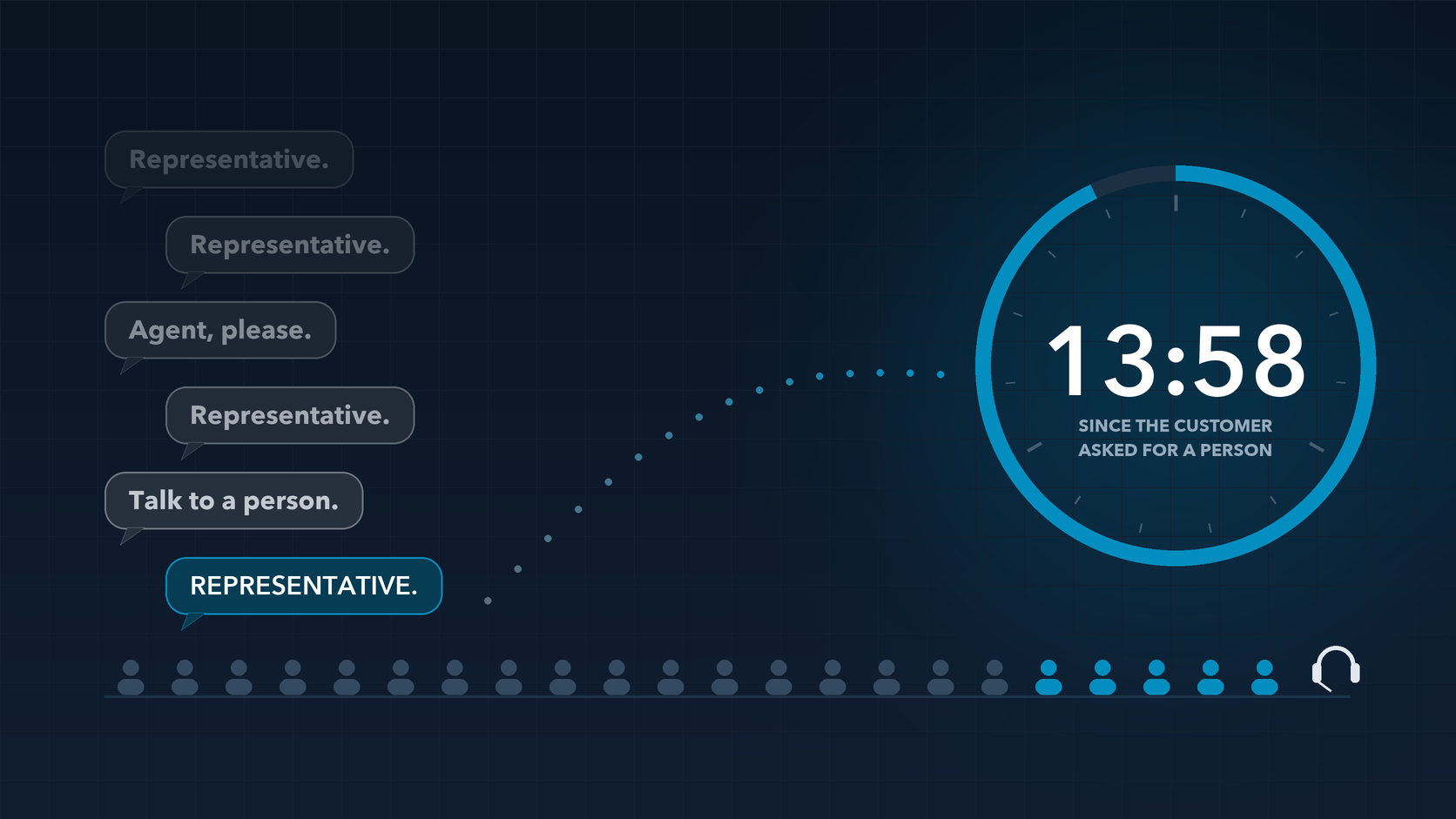
The customers sending these agents value their time. They bought one so they would never again spend eleven minutes on hold to change an address. When their agent can’t finish the job with you, it tells them. It may suggest somewhere that can.
Switching used to be too tedious to bother with. An agent does the tedious part. That is a retention number.
Your wallboard won’t warn you, because every number on it assumes a human:
- Containment drops when a failed bot escalates instantly.
- Abandonment improves because software will hold all day.
- Repeat contacts multiply when an agent retries on a schedule.
- CSAT narrows to customers who still call for themselves. Nobody surveys the robot.
What you can do this quarter
- Find the bots already on your lines. Pull ninety days of contacts. Tag anything that arrives at machine-regular intervals or repeats the same phrasing across unrelated customers. Give that number one owner. Consider implementing detection capabilities for deepfakes on voice and text-based conversations.
- Give them a route that isn’t a voice seat. List your top ten intents. Mark the ones already running on an API that a verified agent could finish without a phone call. If you need help creating MCPs and APIs for bots to work with your business, we can help.
- Write a bot policy that does two jobs. Make read-only the default and require the customer for anything that moves money or cancels a service. Then publish what agents may do on their own. A policy that only says no sends customers somewhere else.
It’s important to baseline the reporting before anyone designs a route. You cannot build for traffic you cannot see. If you’d rather not start from scratch, the CX Foundry Snapshot runs it against your own conversation data in a week or two.
Consumers and their bots will prefer the lowest friction, easiest path to accomplish their goals.
Bots are increasingly relied on to recommend who to do business with.
If your customer’s agent cannot finish the job with you, how long before it finds somewhere that lets it?
— Ben
Subscribe to get The Last Mile every Thursday
Here’s what went down this week.
Everyone is deciding what a customer’s AI agent is allowed to do. Most are deciding by blocking it. A few are writing the rules.
Bleeding Edge
Early signals you should keep on your radar.
The Personal Agent Protocol now has a public draft spec, and it says a personal agent always identifies itself. The draft went up on October 9 and is labeled version 0.3, with several large insurers among its design partners. Status first: it is a draft, its authors say any part can change, and the promised reference implementation has not shipped. The useful part is the scope model. Access can be narrowed to read-only for tasks that only look things up. Read the scopes and ask which of your intents would sit on the read side.
At least five large US banks are now blocking AI agents from customer accounts. American Banker’s October 27 report names JPMorganChase, Citi, Bank of America, Wells Fargo and Morgan Stanley, with Wells Fargo confirming steps on the record. Most of the rest comes from earlier reporting and unnamed sources. The pattern is the lesson. A regulated industry landed on read-only access while a human is absent, and that is a policy you can copy before you need it.
Leading Edge
Proven moves you can copy today.
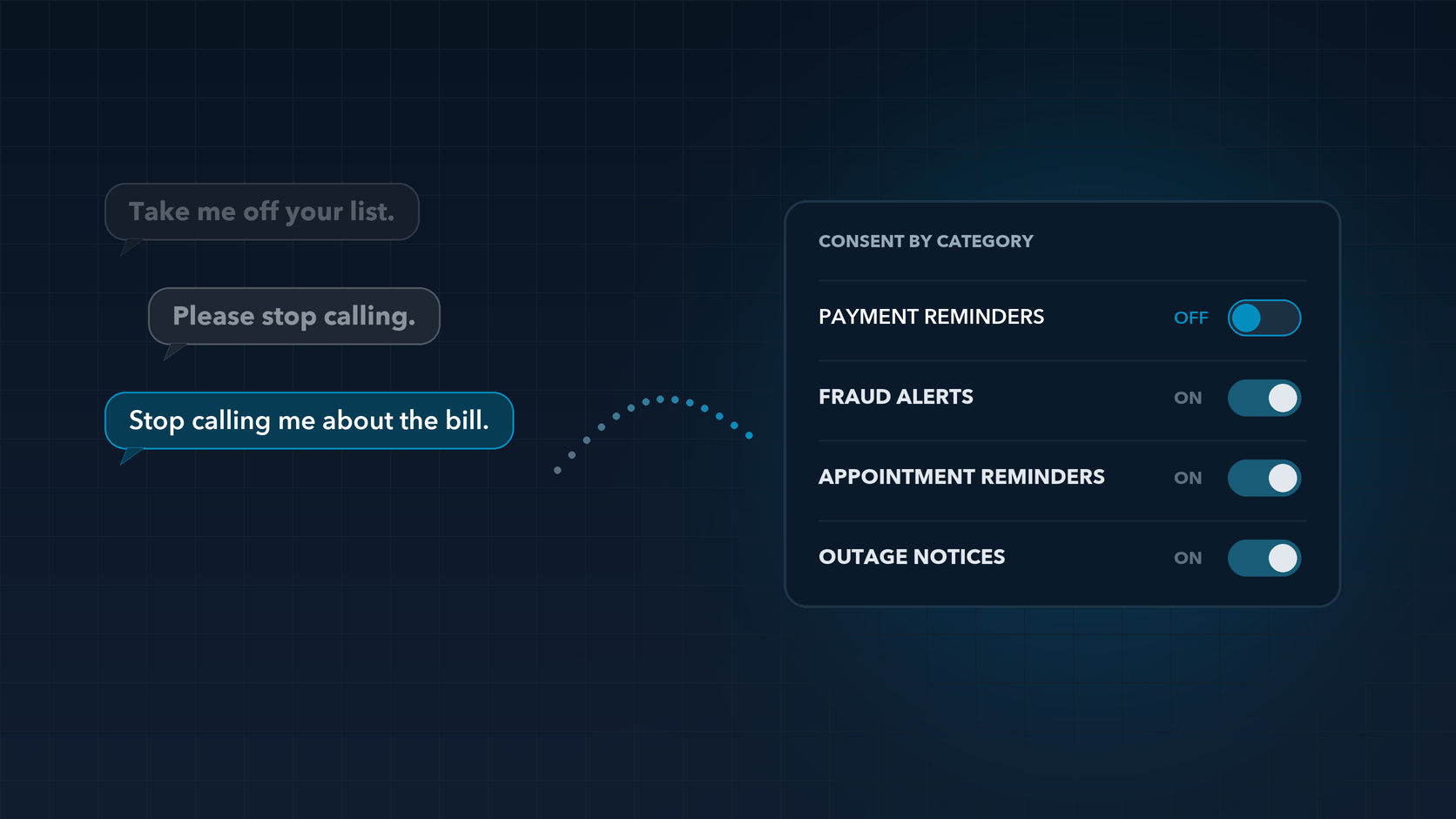
Starting November 25, the FCC lets you name one official opt-out channel for robocalls and texts. The final rule, published in the Federal Register on October 26, ends the duty to honor a revocation made by “any reasonable method.” You can make one of three methods the only way to opt out: a key-press or voice opt-out in the IVR, standard reply words in a text, or a website or phone number you provide. Whichever you choose has to be clearly disclosed on the call or in the text. Two more changes come with it. A customer who stops one type of informational call, such as payment reminders, can still get the others, such as fraud alerts. And every revocation still has to be honored within ten business days. Pick your channel, script the disclosure into every outbound flow, and test the ten-day clock before the 25th.
California’s automated decision-making rules apply from January 1, 2027, nine weeks out. ADMT used for significant decisions before that date must be compliant by then, and anything deployed after must comply before first use. A separate duty matters more on the floor: using biometrics to verify identity counts as significant-risk processing, which needs a risk assessment before it starts, and assessments for processing already running before 2026 are due by December 31, 2027. If you run voice biometrics on California consumers, check which clock you are on.
Off the Ledge
Hype and headaches we’re steering clear of.
Schwab’s CEO says his firm blocks the big outside agents in the tens and twenties a week. That figure comes from a Bloomberg Television interview on October 16, as reported by Gizmodo, and it is one firm’s count with no denominator. Schwab also plans read-only access for outside tools. The headache we are steering clear of is the block-everything reflex. Blocking can protect the customer. It also hands a frustrated customer’s agent a reason to go somewhere else.